top of page
Professional Stock Market Forecasts Since 1998
Market Turning Points - 2026


Are Stocks Overvalued? Why Rotation, Not a Crash, Fixes It
The question returns with urgency: are stocks overvalued? The instinct is to treat it as binary and brace for a crash. But overvaluation concentrates in specific sectors rather than spreading evenly, and it usually corrects through rotation, not collapse. Money leaves the crowded, expensive names and flows into reasonably valued sectors while the broad market holds. This article explains what overvaluation really means and why watching rotation beats reacting to a valuation m
-
Jul 2912 min read


What Is Sector Rotation, and Why a Tech Selloff Isn't Always Bad News
When technology stocks drop sharply, the headlines treat it as a verdict on the whole market. But the size of a selloff in one sector doesn't tell you what's happening to the market as a whole. Very often, on days that look frightening on the surface, the money didn't leave the market at all. It rotated. This article explains what sector rotation is and why a concentrated tech selloff with money flowing into other sectors looks very different from the broad weakness that begi
-
Jun 2413 min read

What Is Market Breadth and Why Narrowing Leadership Doesn't Always Signal a Top
Market breadth measures how many stocks are participating in a move, not just how the headline index is doing. The most common worry now is narrow leadership, with the market concentrated into semiconductors and AI while the rest rolls over. Narrowing breadth precedes every top, yet it also appears inside healthy bull markets that go on to make new highs. This article explains what market breadth is and why the cycle structure, not the breadth reading alone, tells you which o
-
Jun 411 min read

Why a Disciplined ETF Rotation Strategy Starts With the Cycle, Not the Sector
Most ETF rotation strategies start at the wrong end. The investor picks a sector they like, builds a thesis around why it's about to outperform, and then looks for entry timing as an afterthought. The thesis might be correct. The timing usually isn't. The disciplined version reverses the order: the cycle comes first, the sector comes second. This article walks through how to build an ETF rotation strategy on a cycle foundation that works across sectors, asset classes, and fac
-
May 2811 min read

Why a Cycle-Driven SOXL Trading Strategy Beats Chasing Chip Earnings and Headlines
SOXL traders have a specific problem. They get bullish into chip earnings, buy the rip, and watch the gap fade. The pattern is consistent enough to be embarrassing, and it has nothing to do with whether the trader's view on semiconductors is right or wrong. The problem isn't analysis. It's timing. This article shows how cycles, crossover averages, and sector leadership turn SOXL from a headline lottery into a tradable instrument with structural entries and clean exits.
-
May 510 min read
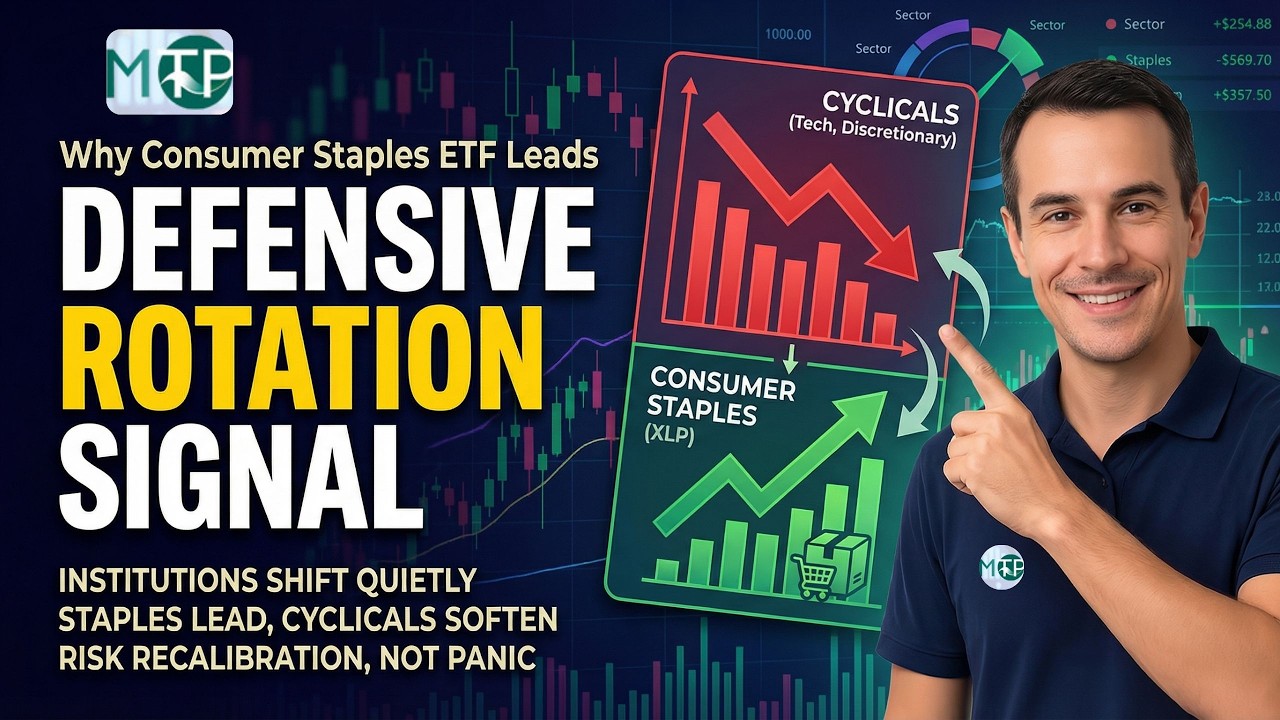
Why Consumer Staples ETF Leads When Institutions Rotate Defensive
Over the past six months, institutional capital has moved selectively into defensive sectors while broad indices stalled. Consumer staples ETF has pushed well ahead of SPY. Healthcare gained 16% versus SPY's 7-8%. This is late-cycle consolidation, not a bear market. GDP slowed to 1.4% while inflation remains sticky. Hold defensive positions alongside cash while awaiting the early March trough. Preserve capital until timing confirms.
-
Feb 205 min read

ETF Trading Strategy Using Quarterly Institutional Adjustment Patterns
ETF trading strategy becomes dramatically more effective when built around quarterly institutional adjustment patterns rather than technical indicators or momentum signals. Success emerges from recognizing that pension funds, mutual funds, and endowments must restore target allocations every quarter regardless of market conditions using price channels and crossover signals for systematic timing.
-
Nov 28, 20259 min read

ETF Trading with Institutional Cycle Timing for Consistent Profits
ETF trading generates consistent profits when aligned with institutional cycle patterns rather than reacting to daily price movements or news headlines. Success emerges from recognizing that quarterly adjustment cycles, Federal Reserve meeting patterns, and seasonal flows create predictable windows when sector ETFs experience institutional buying or selling pressure using price channels and crossover signals for optimal timing.
-
Nov 8, 20259 min read
ETF Meaning and How Institutional Cycle Timing Maximizes Returns
ETF meaning extends far beyond the basic definition of exchange-traded fund to encompass how these instruments capture institutional money flows through predictable cycle patterns. Understanding what ETFs truly represent transforms them from simple diversification tools into systematic vehicles for anticipating quarterly institutional adjustments, Federal Reserve meeting rotations, and seasonal capital deployments using price channels and crossover signals.
-
Nov 1, 20256 min read

ETF Investing with Institutional Cycle Timing for Long-Term Growth
ETF investing becomes significantly more effective when aligned with institutional cycle patterns rather than following traditional buy-and-hold approaches or responding to market news. Long-term growth through ETFs emerges from understanding when large institutional money systematically rotates between sectors according to predictable calendar-based patterns using price channels and crossover signals for optimal timing and enhanced returns over time.
-
Oct 25, 20256 min read
Best ETF Trading Strategies Using Institutional Cycle Timing for Consistent Profits
The best ETF trading strategies emerge from understanding institutional cycle patterns rather than chasing daily price movements or relying on technical momentum indicators. Professional traders recognize that ETF markets move according to predictable calendar-based institutional flows, quarterly rebalancing cycles, and Federal Reserve meeting patterns that create systematic opportunities across sectors using price channels and crossover signals for consistent results.
-
Oct 18, 202514 min read

Best ETF Trades When Combined with Institutional Cycle Timing
ETF trading becomes dramatically more effective when aligned with institutional cycle patterns rather than reacting to daily price movements. The best ETF trades emerge from understanding when large institutional money flows into and out of specific sectors according to predictable calendar-based patterns. This systematic approach transforms ETF selection from guesswork into a disciplined process based on timing, structure, and proven cyclical behavior with price channels and
-
Oct 11, 202511 min read
bottom of page