Market Distribution: Why Weak Employment and Fading Cycles Matter More Than Headlines
Market distribution often begins quietly, long before price action looks dramatic or alarming. Headlines may continue to focus on inflation progress or policy expectations, while internal market conditions start to change underneath. This is typically when leadership narrows and momentum becomes harder to sustain. The market does not need to break for risk to shift.
Recent economic data has started to reinforce what market behavior has already been suggesting. Hiring growth has slowed and revisions have trimmed prior strength, but these developments are best viewed as confirmation rather than cause. Markets tend to adjust as demand fades, not when headlines announce it. Cycles and price behavior usually lead that adjustment.
This is why understanding market distribution matters. Distribution is not about calling a top or predicting a collapse. It is about recognizing when the character of the market changes and risk management becomes more important than participation. Cycles help frame that shift without emotional interpretation.
Employment Weakness as Confirmation, Not Cause
Employment data often lags changes in market behavior. Hiring tends to slow after demand has already begun to soften, not before. That is why employment should be treated as confirmation of market conditions rather than the driver of them. Cycles and price behavior usually reflect these shifts earlier.
Recent payroll growth and revisions suggest that labor conditions are no longer improving. This aligns with what fading intermediate cycles have been showing beneath the surface. It does not imply sudden stress or imminent breakdown. It simply reinforces that demand is no longer expanding at the same pace.
When employment data lines up with weakening cycles, it strengthens the case for caution. Rallies in this environment often struggle to build follow-through. Participation becomes more selective, and leadership grows narrower. These are typical characteristics of distribution phases.
Nasdaq Intermediate Cycles Show Fading Follow-Through
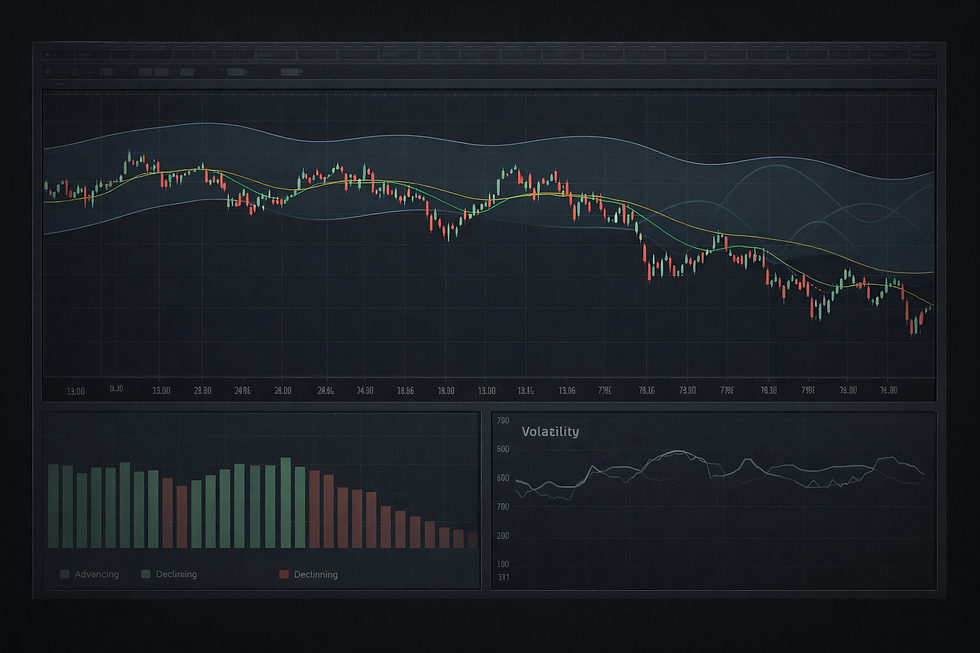
Since October, Nasdaq intermediate cycles have been producing a sequence of lower highs. Each advance has required more effort and delivered less follow-through. This behavior reflects weakening demand rather than short-term hesitation. Cycles are showing momentum fading even as prices remain supported.
This matters because intermediate cycles often weaken before broader structure changes become obvious. They act as an early signal that upside is becoming harder to sustain. When cycles lose momentum, rallies tend to be shorter-lived and more vulnerable to failure. That environment increases the risk of chasing strength.
Markets in these phases can still produce sharp moves. Those moves often look convincing in isolation but fail to hold. Recognizing this dynamic helps traders avoid reacting to spikes that lack cycle support.Check our post on Short Squeeze Pattern: Trade the Spike Only When Cycles and Crossovers Align for more info.
Long-Term Cycles Tend to Fade Before Structure Changes
Long-term cycles rarely collapse suddenly. They typically stall and fade before meaningful downside develops. This gradual loss of altitude explains why markets can remain elevated while conditions underneath weaken. Narrow leadership can delay adjustment, but it cannot prevent it indefinitely.
The Nasdaq’s long-term cycle has shifted from rising to gradually fading. That transition does not point to immediate breakdown. It does, however, change how pullbacks behave and how quickly rallies recover. Markets often become more congested during this phase.
This is why distribution is best viewed as a process rather than an event. Price action can remain resilient while cycles work through this transition. Patience and discipline become more important than aggressive positioning. Understanding long-term cycle behavior helps set realistic expectations.
Cross-Market Behavior Supports a Cautious Read
Distribution phases are often accompanied by subtle changes across markets. Currency, rate, and global capital flows tend to shift as risk appetite adjusts. These signals usually confirm what equity cycles are already showing. They rarely act as standalone drivers.
Recent cross-market behavior suggests capital is becoming more selective rather than exiting outright. That distinction matters. When risk is being managed instead of abandoned, markets often rotate and consolidate instead of breaking. This aligns with the current cycle picture.
Taken together, these behaviors raise the odds that the market is transitioning rather than collapsing. Leadership rotation and selective participation are common in this phase.Check our post on Yen Carry Trade Breakdown After December 10 With Bank of Japan Rate Decision for more info.
Discipline Matters More Than Optimism During Distribution
Distribution phases test patience. Rallies can appear strong for brief periods, only to fade as demand fails to expand. This is where discipline becomes critical. Cash is not a retreat; it is a strategic position.
Holding cash after a 4/7 crossover violation helps protect gains and reduce emotional pressure. It allows traders to step back while cycles work through weaker phases. Chasing every bounce during distribution often leads to frustration and losses. Structure matters more than activity.
Patience also creates flexibility. Distribution does not last forever, but it often lasts longer than expected. Preserving capital now allows participation later when conditions improve.Check our post on Stair Step Pattern Trading: How Cycle Analysis Identifies Predictable Market Climbs and Buyable Dips for more info.
People Also Ask About Market Distribution
What is market distribution?
Market distribution describes a phase where selling pressure gradually outweighs buying demand, even if prices do not fall sharply. It often shows up as weaker follow-through on rallies and more frequent pullbacks. Leadership narrows, and it becomes harder for the market to push higher with ease. This process usually reflects institutions managing exposure over time.
Distribution is commonly misunderstood as an immediate bearish signal. In reality, it can persist while indexes remain elevated. Cycles help reveal when internal support is thinning even if headlines stay calm. The goal is not to predict a crash but to recognize a shift in market behavior.
How does employment data fit into market distribution?
Employment data helps confirm changes that markets have already begun to reflect. Hiring typically slows after demand has started to soften. That is why employment should not be treated as the driver of distribution. Instead, it reinforces what cycles and price action are already showing.
When employment data aligns with weakening cycles, it increases confidence in the broader read. It suggests that market behavior is grounded in real economic conditions. This alignment supports a more cautious approach without requiring dramatic conclusions.
Why do cycles matter during distribution?
Cycles provide a way to interpret market behavior without relying on headlines. In distribution phases, intermediate cycles often weaken first. Advances become shorter and less decisive. That change in rhythm is important.
Long-term cycles usually fade gradually rather than collapse. This creates an environment where the market drifts and frustrates both bulls and bears. Cycles help traders recognize when patience is more appropriate than aggression.
Should traders hold cash during distribution?
Cash becomes a valuable position during distribution. It protects gains and reduces the urge to force trades. Holding cash does not mean abandoning the market. It means waiting for conditions that offer better follow-through.
Using crossover discipline helps guide this decision. When structure weakens, stepping aside preserves flexibility. Cash allows traders to re-engage when cycles reset.
How long does market distribution usually last?
Distribution length varies depending on economic and market conditions. Some phases resolve quickly, while others take longer to unwind. What matters is not duration but behavior. As long as cycles remain weak, caution is warranted.
When cycles begin to turn higher and rallies start holding, conditions improve. That transition often creates the next opportunity. Staying patient during distribution helps traders remain prepared.

Resolution
Current market behavior suggests a transition rather than a breakdown. Fading cycles, selective participation, and softer follow-through all point in that direction. Employment data adds confirmation but does not change the underlying message. Risk is shifting toward preservation.
The mistake is treating distribution as a prediction of collapse. Institutions treat it as a phase to manage exposure. Traders can do the same by respecting cycles and crossover discipline. Patience here is a position.
Join Market Turning Point
Distribution phases are where many traders give back gains. Headlines remain calm, but structure weakens underneath. This is where cycle-based analysis helps keep decisions grounded. It provides clarity when optimism and fear both mislead.
Explore how cycle-based timing helps navigate market distribution at Market Turning Point. You will learn how to protect capital, manage exposure, and stay patient while cycles work through transitional phases. The goal is not to trade more but to trade when conditions support follow-through.
Conclusion
Market distribution is about recognizing when demand fades and structure changes. Cycles are showing that momentum has weakened, even as prices remain supported. Employment data reinforces this view without driving it. Together, they suggest caution rather than panic.
In this environment, discipline matters more than optimism. Holding cash after structural violations helps protect gains. Patience keeps traders aligned with the market’s rhythm. When cycles reset, opportunity returns.
Author, Steve Swanson


